Completely incomprehensible, but very impressive!
1 Like
I tried to keep the real technical stuff out, didn’t mention the Miller effect, base storage, Baker clamps, coupling capacitance or ground bounce at all. Oops, just did 
5 Likes
Ah, of course: now you’ve mentioned them, it has all become clear…
6 Likes
The second PCB containing the CPU’s registers was the one I was expecting to have the most problems with, but when I had soldered the bare minimum to test I found it worked first time, if with rather slow performance. My celebration was soon curtailed when I tried tweaking component values to improve performance, instead of speeding up they stop working altogether. Now, these circuits are designed to remember digital values by taking a snapshot at an instant in time, and having them behaving unreliably wasn’t on. Time to go back to the drawing board, or rather the prototyping breadboard.
After a few days experimenting and tweaking I settled on a new flip-flop design with two extra transistors on the inputs, here’s the circuit diagram, because I know you’re interested 
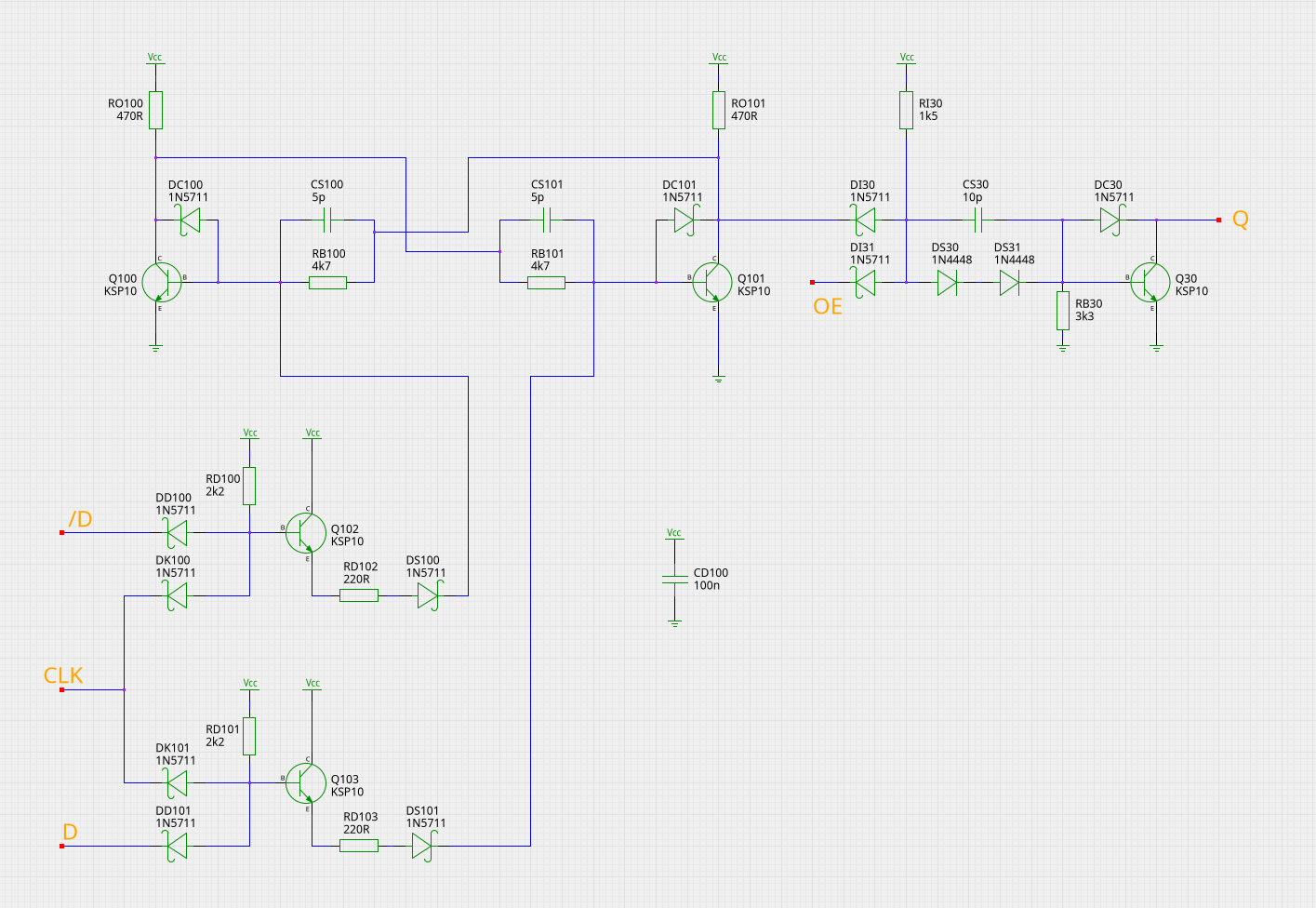
Now came the part I think I find most enjoyable, redesigning the PCB layout. I had to fit the new circuit into the same size as the old one so I could still fit 48 of them on the PCB and also get the traces for the control lines to them. After a few days I got the layout to work so the copper tracks on both sides of the board could connect things up. (Blue and red lines in the pic.)
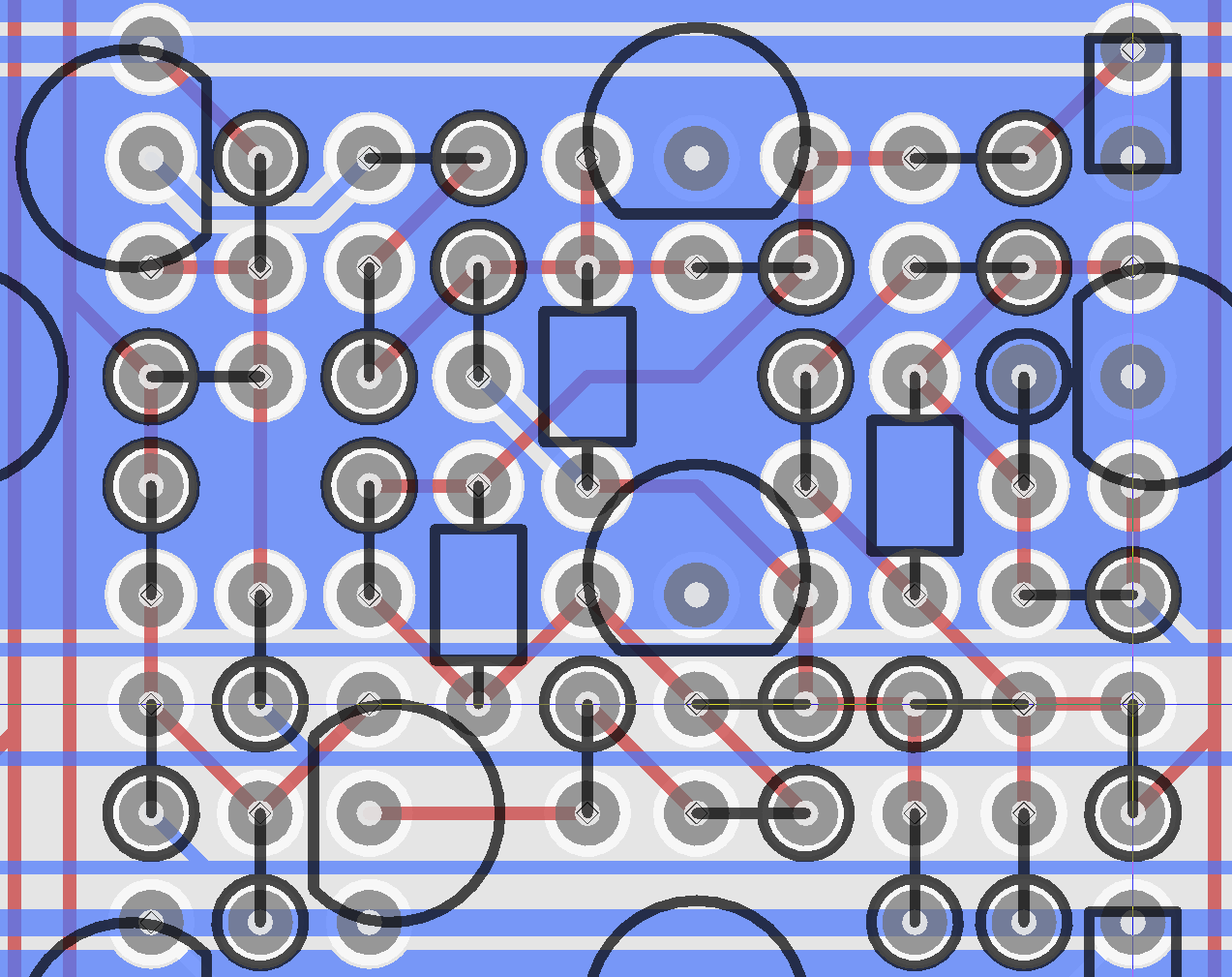
After uploading the PCB design to the Chinese manufacturer’s web site I clicked ‘buy’ and seven days later they arrived. This time the first tests showed things worked as good as I could have ever hoped for  and I now had something to keep me occupied over the end of year holiday period. I did a hundred or two components most days, doing short stints due to my poorly left hand and to stave off neck and back pain from being hunched over the boards.
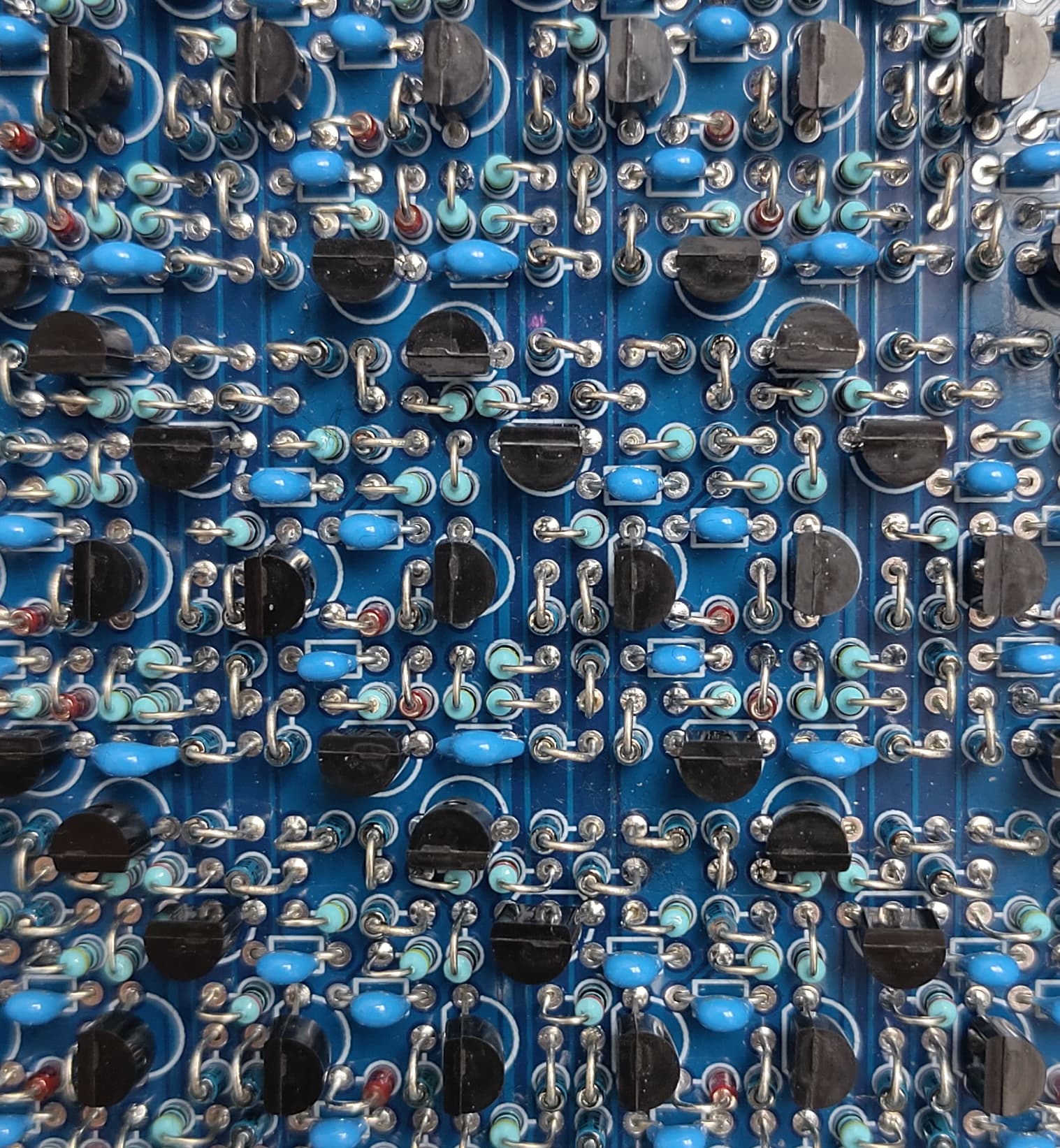
About 3000 solder joints later I have a board with five 8-bit registers.

As a Christmas present to myself I also bought something I’ve wished I’d had for a long time, that is a bench power supply. (The thing to the left with the red digits on.) That can supply up to 5 Amps of current at any voltage up to 30V. Most importantly, you can set it to limit the current to any amount and have it switch off if it goes too high. Added protection to hopefully stop all my hard work going up in smoke if when I do something stupid.
4 Likes
There is a certain beauty to it BM, I may get pilloried for stating the fact… but knowing you hand soldered that all turns it from 80’s function design style into something more aesthetic.
2 Likes
Thanks. Appearance was one of the considerations when doing this. Turned out to have an almost woven appearance and it’s somewhat mesmerising staring at the board.
7 Likes
All that went over the top of my head but it does look like a thing of beauty.
2 Likes