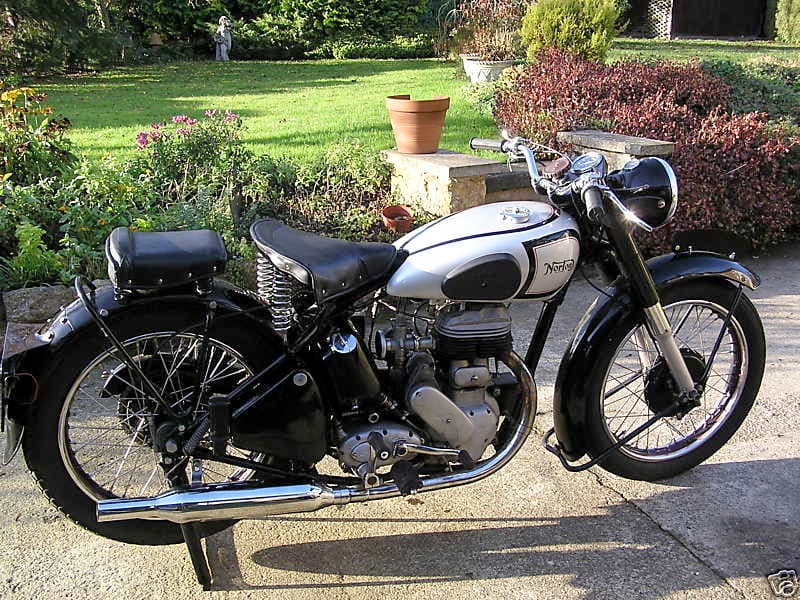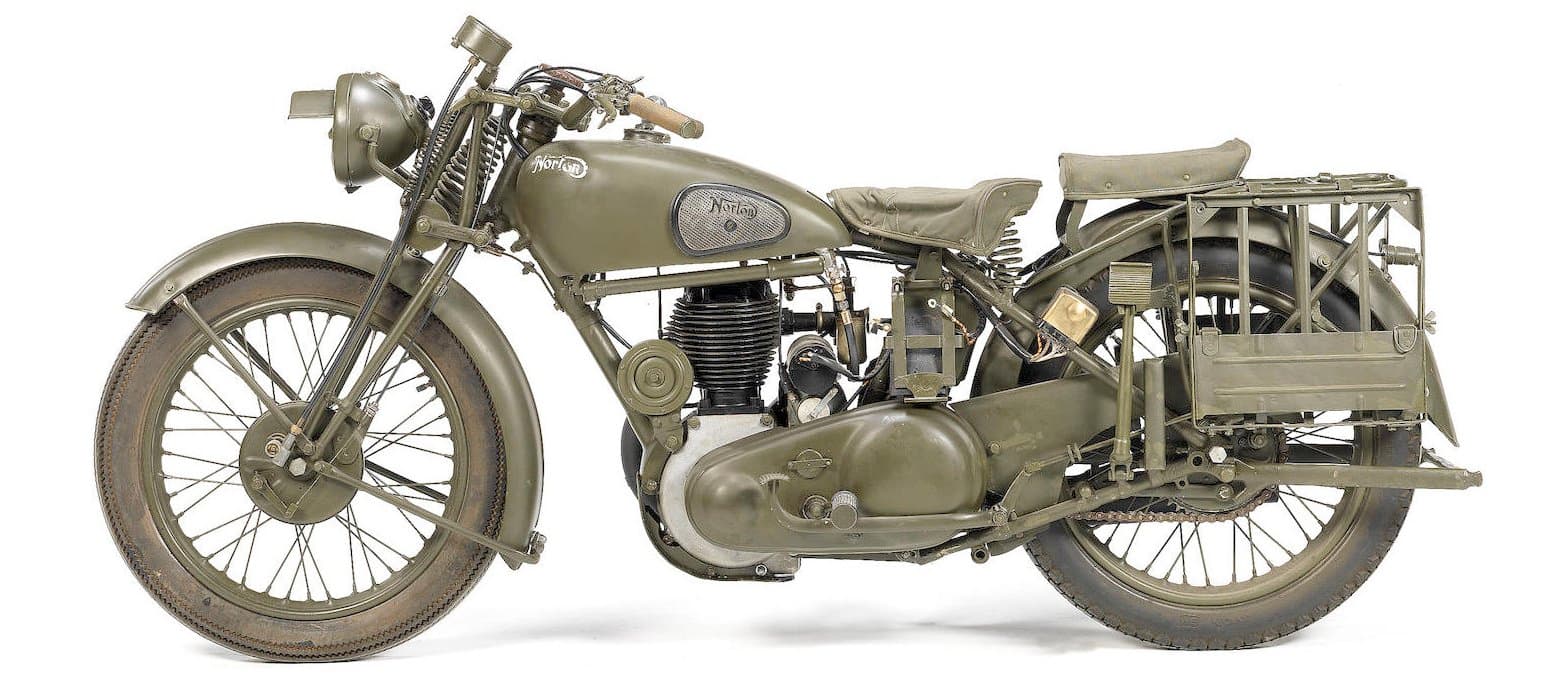
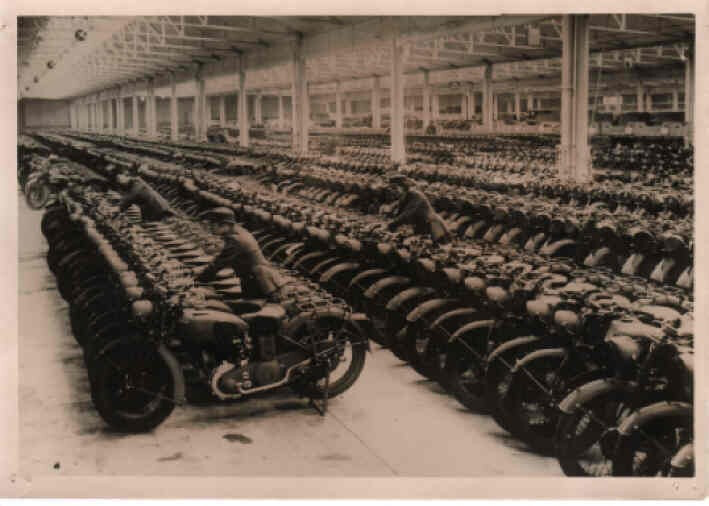
108 Norton WD16H 490cc side valve, single-cylinder motorcycles were prepared to be shipped to the Royal Army Ordnance Corps (RAOC) Chilwell Depot, Nottinghamshire, England in 1936. Norton engineers had beeen working with the War Office on a wide range of modifications to the 16H model.
The WD (War Department) model was gven a higher frame to provide the 5¾ inch ground clearance required. This was accomplished by using a shorter front down tube and shorter saddle tube. These bikes had the reliable 490cc side-valve single cylinder engine and were fitted with heavy duty front girder forks fitted with strengthened rebound springs (the main springs remained the same as on the pre-war civilian model), steel trials type foot-pegs, a carrier, sports tires, speedometer, electric horn, and a long propstand.
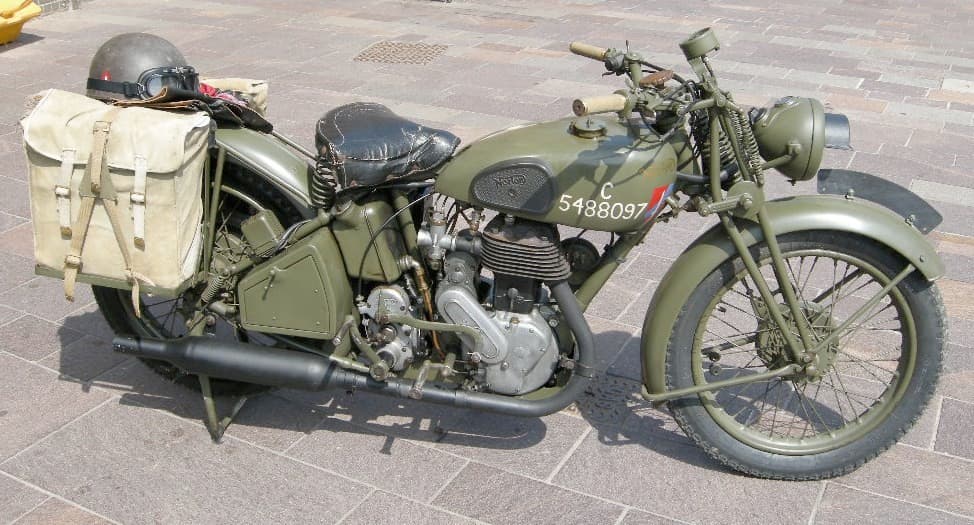
Military orders were placed for the 16H from 1936 and continued throughout the course of the war, setting a ten-year record for the longest time the War Office procured a single make of motorcycle. The entire staff of the Norton factory on Bracebridge Street, Birmingham were needed to meet demand – even the racing team found themselves on the WD16H production line.
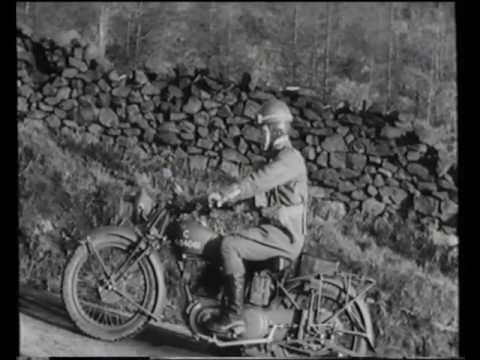
A popular dispatch bike, the WD16H was also used for training, reconnaissance, convoy control and escort duties. Military Nortons used paint schemes in Army Service Green, Khaki green, Khaki brown or Olive green. A number of bikes were painted ‘desert camouflage’ by local workshops in the Middle East and used in Palestine and the North Africa Campaign.
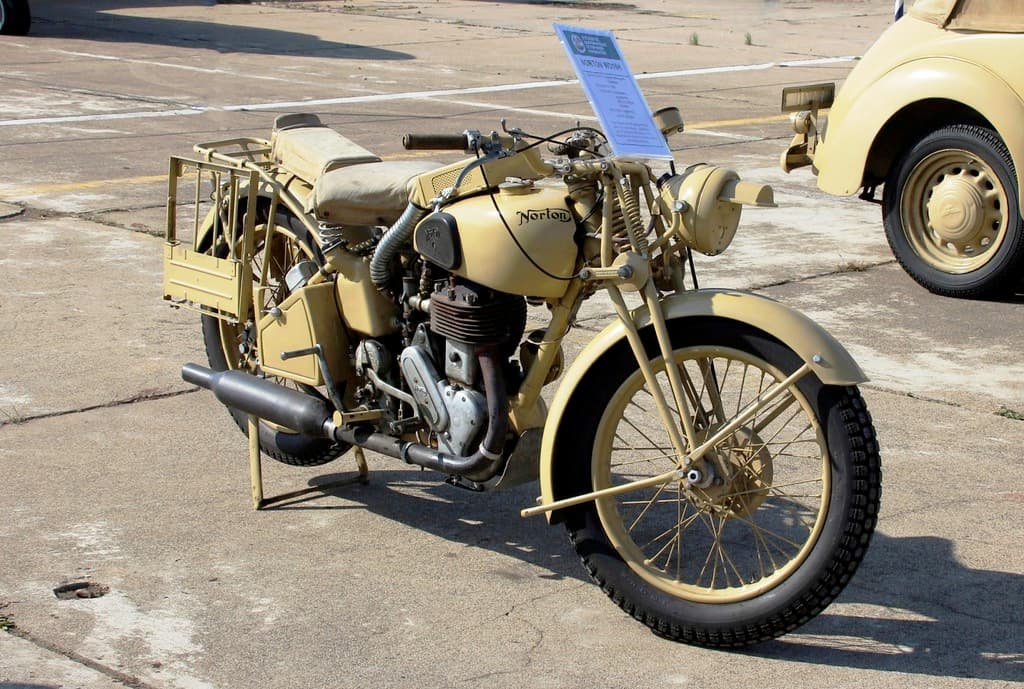
Norton was one of the main suppliers of motorcycles to the British Army in World War II with a total of nearly 100,000 produced. British Army Nortons were also supplied to the Commonwealth forces such as Australian, New Zealand, India and Canada. The 16H would be one of the first civilian models built by Norton after the end of the war. In 1947 it received its final upgrade, the girder front end was canned in favor off telescopic forks to improve handling and give the bike a more ‘modern’ look. The basic engine configuration proved popular so Norton continued production until the mid-1950’s when the fashion for twin cylinder bikes were what all the cool kids wanted.