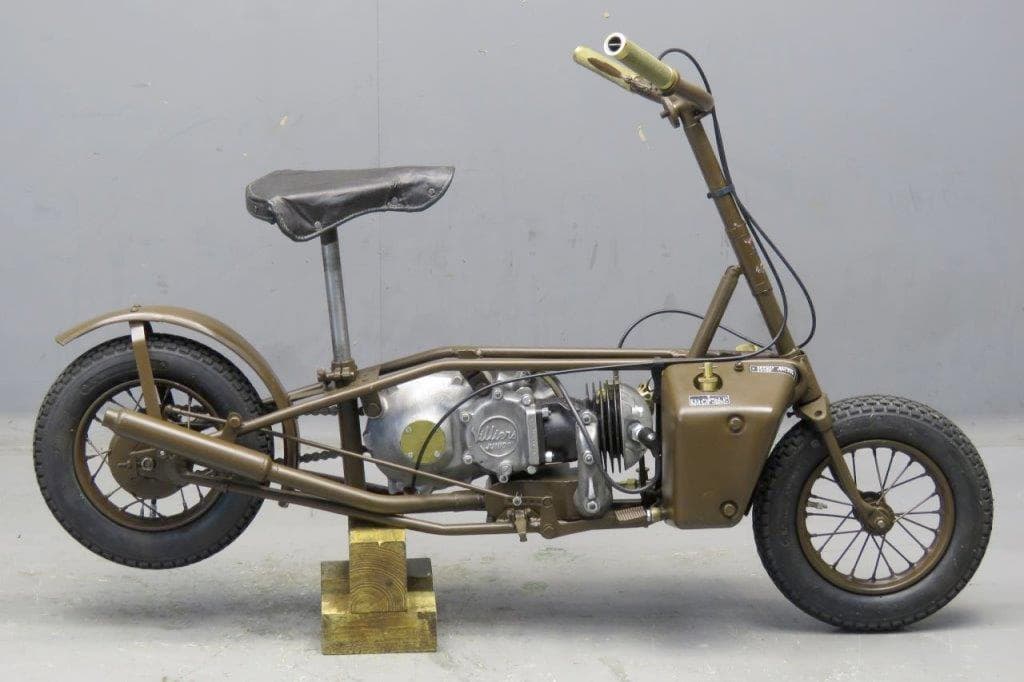
The final batch of Mark 2 Series 2 Welbikes were produced in 1942.
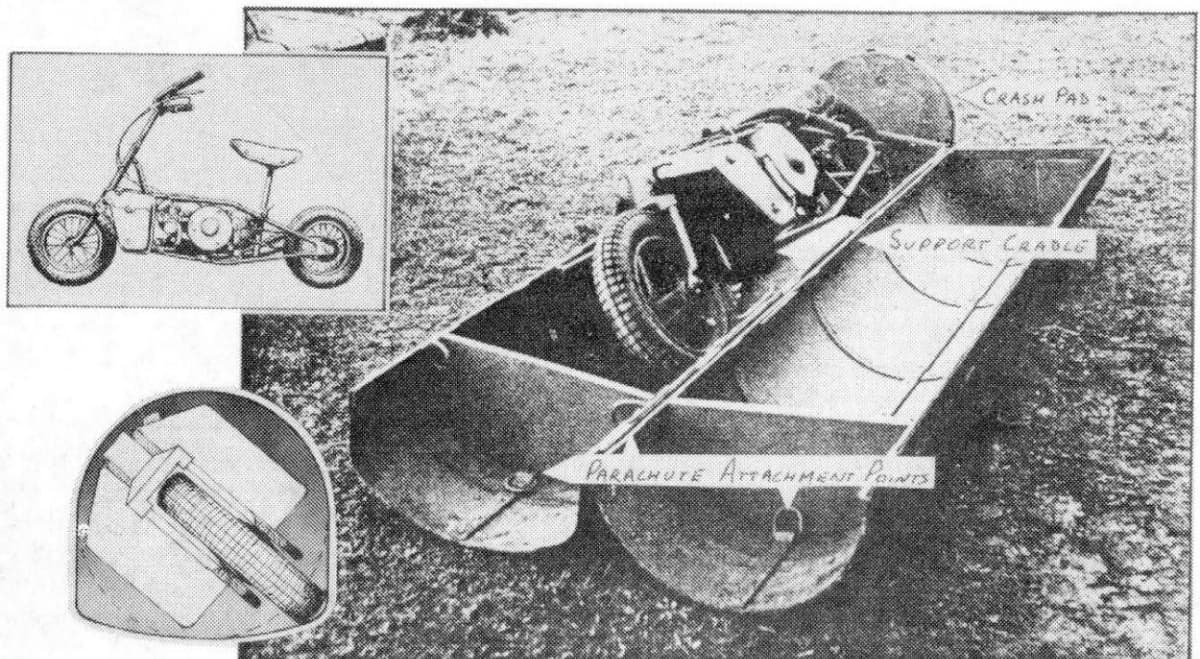
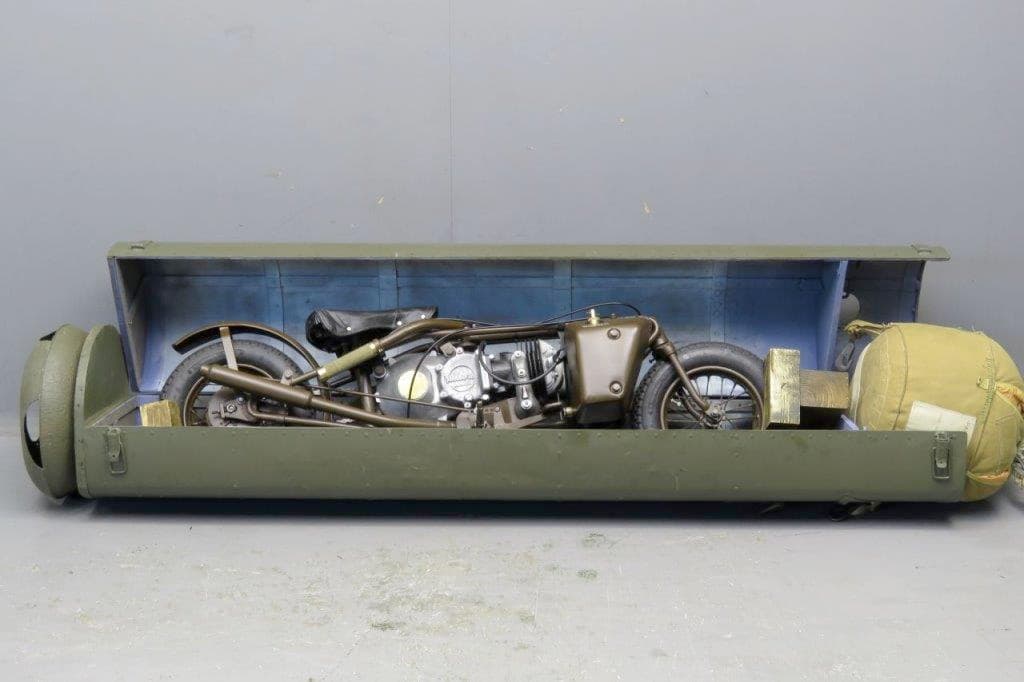
Powered by a Villiers 98cc (6.0 cu in) single-cylinder two-stroke engine, the Welbike was designed to fit into a CLE Canister – a standard parachute airdrop container 51 inches (130 cm) long, 15 inches (38 cm) high, and 12 inches (30 cm) wide. Once deployed, they were easily assembled and ready for use as quickly as possible. There was very limited space in the container, so the Welbike had no suspension, no lights and no front brake.
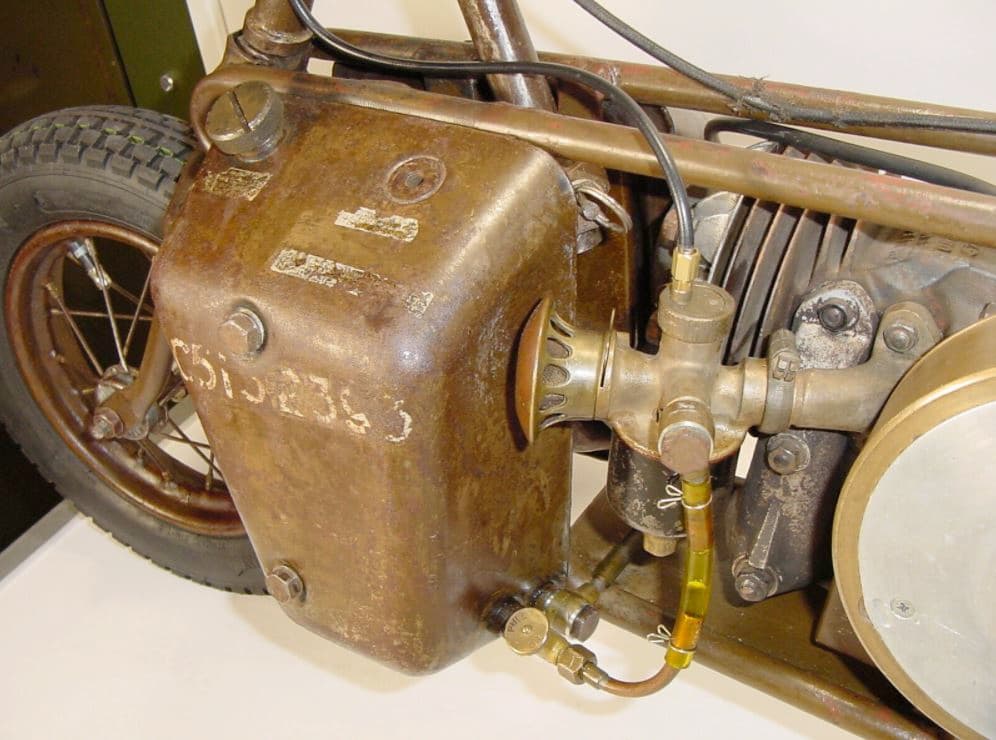
The final version had “saddle” fuel tanks with a splash shielding between them, and an improved filler cap replacing the original design that required the removal of the pressurisation pump, which was found to be too time-consuming.
Once it hit the ground all that was needed was to twist the handlebars into position and lock them on spring-loaded pins. The saddle was pulled up and the footrests folded out ready to push start the two stroke engine and ride into action. The aim was that a paratrooper could remove the Welbike from its special green container and be on the road within eleven seconds.
In combat situations the Welbike could prove a liability as paratroops needed to get under cover as quickly as possible and had to find the containers before they could start to assemble them. The difference in weight between a parachutist and a container meant that they often landed some distance apart, rather defeating the purpose, and some were captured by enemy forces or lost before they could even be used. The low power and small wheels also meant that they struggled to cope adequately with the regularly rough battlefield roads so were often abandoned by troops who found it easier to continue on foot.